





























Key Takeaways:
-
Hypoallergenic means less likely to trigger allergies, not allergy-free.
-
Always check ingredients or fabric materials, not just the hypoallergenic label.
-
Mulberry silk offers a smooth, breathable surface ideal for sensitive skin.
-
Choose OEKO-TEX certified natural fabrics and patch test when possible.
You bought the hypoallergenic lotion. The hypoallergenic pillowcase. Maybe even a "hypoallergenic" dog. And you're still dealing with redness, itching, or sneezing. If that sounds familiar, you're not alone, and you're not imagining it.
Here's the surprising part: the word hypoallergenic isn't backed by any official testing requirement. It can be printed on a bottle of face wash, a bag of dog food, or a set of sheets without a company proving anything first.
That doesn't mean hypoallergenic products are useless. It just means you need to know what the term really promises, and what it doesn't, so you can shop smarter for your skin, your home, and your bedding.
What Does Hypoallergenic Mean?
Hypoallergenic simply means "less likely to cause an allergic reaction," not "impossible to cause one." The prefix hypo means "under" or "less than." So a hypoallergenic product is designed to have fewer allergy triggers than a standard version, not zero.
The Word Isn't Regulated
Here's a fact that surprises a lot of shoppers: the term hypoallergenic is not regulated by the FDA. Any particular company can put "hypoallergenic" on a label without submitting proof to a government agency first. There's no test a product has to pass and no official definition manufacturers must follow.
Quick Fact: In the U.S., there are no federal standards for what "hypoallergenic" means on a label. Companies can make the claim without official testing.
Why This Matters for Shoppers
Because the term isn't regulated, manufacturers aren't required to substantiate hypoallergenic claims with data. That's not necessarily a red flag. It just means the label is a starting point, not a guarantee. You still have to look at the ingredients or materials yourself.
Hypoallergenic Products: Skincare and Cosmetics
Hypoallergenic isn't just a bedding word. You'll see it on cleansers, makeup, and skincare too.
What You Should Know About Hypoallergenic Fabric

How Hypoallergenic Formulas Are Made
Hypoallergenic cosmetics are formulated to reduce allergens, usually by leaving common irritants out. Formulas often use fewer ingredients overall, since every added ingredient is a chance for a reaction. Brands commonly avoid:
-
Harsh chemicals and harsh ingredients like sulfates
-
Synthetic dyes
-
Added fragrances (look for "fragrance free" on the label)
-
Essential oils, which can trigger contact dermatitis in sensitive skin
-
Preservatives linked to skin sensitivities
Patch Test Before You Commit
No scientific studies confirm that hypoallergenic products cause fewer reactions across the board, so a patch test is still your best tool. Dab a small amount on your inner arm, wait 24 to 48 hours, and check for redness, swelling, or itching before using it on your face or body.
Pro Tip: Personal allergy triggers vary a lot. Reading the full ingredient list matters more than trusting the word "hypoallergenic" alone.
|
Common Irritants to Watch For |
Gentler Alternatives |
|---|---|
|
Alcohol, harsh surfactants |
Fragrance-free cleansers |
|
Synthetic dyes |
Dye-free formulas |
|
Added essential oils |
Unscented formulas |
|
Heavy preservatives |
Minimal-ingredient formulas |
What About Hypoallergenic Pets?
Pet allergies are one of the most common places you'll see this word misunderstood.
No Breed Is Completely Allergen-Free
No dog or cat breed is completely non-allergenic. Pet allergies usually come from proteins in an animal's saliva, skin cells, and urine, not just fur. So even low-shedding pet breeds still produce these allergens.
What "Hypoallergenic" Really Means for Pets
Hypoallergenic pets are thought to produce lower levels of allergens, often because they shed less hair and spread less dander around the house. Less hair floating around can mean less exposure for some people. But "less" is not "none," and sensitive individuals can still react.
Quick Fact: Even top hypoallergenic pet breeds still produce allergens. If you have severe pet allergies, spend time with the specific animal before bringing one home.
Hypoallergenic Bedding and Fabrics for Sensitive Skin
Now to the fabric question many of you came here for.
Fabrics That Commonly Cause Irritation
Certain materials are more likely to trigger skin reactions, especially for people prone to redness, itching, or rashes:
-
Wool – rough fibers can rub against skin
-
Polyester – traps heat and moisture against the body
-
Rough-weave synthetics – can cause friction and dryness overnight

Best Hypoallergenic Fabrics
Natural fibers tend to be gentler and more breathable:
-
Mulberry silk – tightly woven, smooth, and naturally resistant to dust mites
-
Linen – breathable and durable
-
Organic cotton – soft, but absorbs moisture rather than wicking it away
-
Bamboo – soft and moisture-wicking
Silk vs. Other Hypoallergenic Fabrics
Silk's advantage comes down to two things: it doesn't trap allergens the way looser weaves can, and it doesn't rub against skin the way rougher fabrics do. Cotton absorbs moisture and oils and holds onto them, which can encourage bacteria growth and breakouts.
Silk wicks moisture away instead, helping skin stay dry and comfortable.
Why Mulberry Silk Stands Out
This is where the science and the reviews line up.
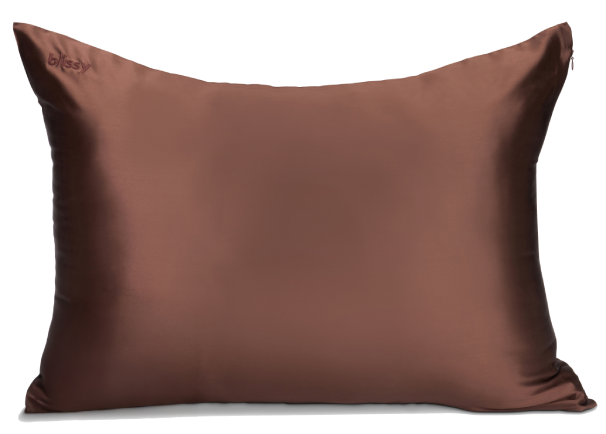
In an independent safety trial by Princeton Consumer Research, 108 participants, half with self-reported sensitive skin, patch-tested Blissy's 100% mulberry silk pillowcase over several weeks. Zero percent of participants showed irritation or sensitization, supporting claims like hypoallergenic and safe for sensitive skin.
Dermatologists back this up too. As board-certified dermatologist Dr. Aleksandra Brown puts it, traditional pillowcases can work against your skin by trapping dirt and bacteria, which is part of why she recommends Blissy's dermatologist-backed, clinically studied silk pillowcase.

Further reading:
The praise isn't just clinical. As Good Housekeeping put it in their pillowcase testing roundup:
"the pillowcase looked and felt great after our laundering tests and maintained its smoothness once washed, which is a huge feat for delicate silk fabric. It also wicked moisture well and proved pill-resistant in our tests." -Good Housekeeping Institute
Combined with tens of thousands of five-star customer reviews, it's a rare case where the lab results, the dermatologist opinion, and the everyday reviews all agree.
Quick Fact: Look for OEKO-TEX certification on silk bedding. It means the fabric has been independently tested for harmful substances.


How to Shop for Hypoallergenic Bedding: A Quick Checklist
Use this checklist before you buy:
-
Look for OEKO-TEX or similar third-party certification
-
Choose natural fibers like silk, linen, or bamboo over synthetics
-
Check for a tight, smooth weave that resists trapping allergens
-
Read real customer reviews from people with sensitive skin
-
Patch test new bedding against your skin for a few nights if you're especially reactive
-
Don't rely on the word "hypoallergenic" alone; check the material


